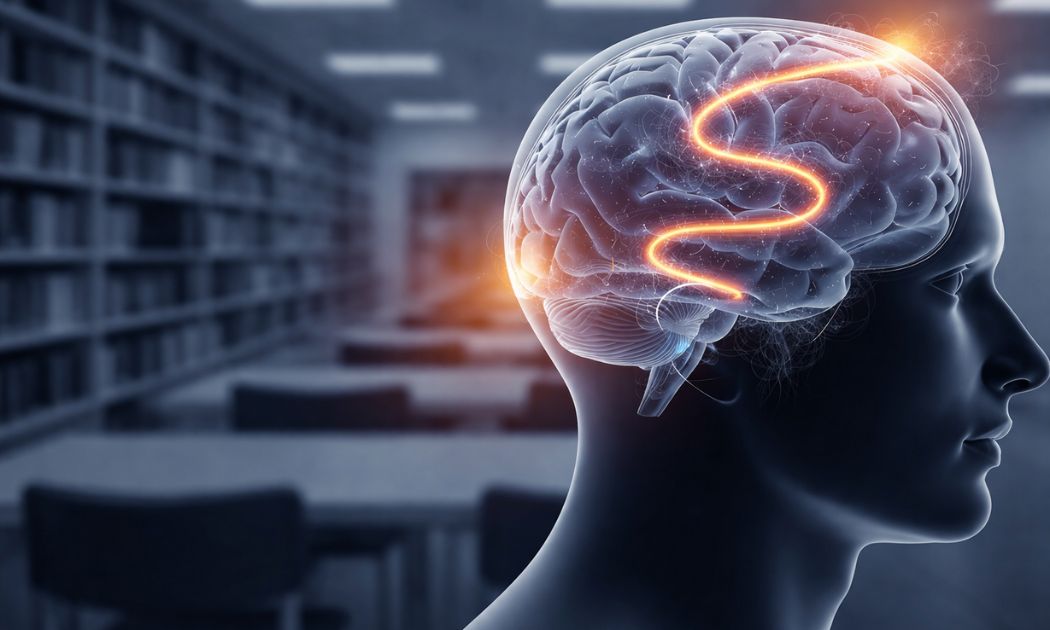
Many learners believe that logical thinking means always reaching the correct answer through careful reasoning. In classrooms and exams, students are often told to “think logically” when solving problems. However, psychology and cognitive science show that the human mind does not always operate through pure logic. People frequently rely on mental shortcuts, biases, and assumptions that can create the illusion of logical thinking.
Understanding this illusion is important for academic success, problem-solving, and critical analysis. When students recognize how reasoning errors occur, they can improve decision-making, avoid common mistakes, and strengthen analytical skills.
What Is Logical Thinking?
Logical thinking refers to the ability to analyze information, identify patterns, and reach conclusions based on evidence. It involves structured reasoning where each step follows from the previous one. Mathematics, science, and analytical problem-solving rely heavily on logical thinking.
Typical elements of logical reasoning include:
- Identifying facts and relevant data
- Evaluating relationships between ideas
- Drawing conclusions based on evidence
- Avoiding contradictions
In theory, this process should lead to reliable conclusions. In practice, the brain often simplifies complex situations through shortcuts known as heuristics. While these shortcuts save time, they can also produce reasoning errors.
Why the Mind Creates an Illusion of Logic
The brain processes large amounts of information every day. To manage this load, it automatically uses patterns and quick judgments instead of slow, deliberate reasoning.
This leads to a situation where people believe they are thinking logically even when their conclusions are influenced by bias or incomplete information.
Several factors contribute to this illusion:
1. Cognitive Bias
Cognitive bias occurs when personal beliefs or expectations influence reasoning. For example, confirmation bias makes people focus on information that supports their existing opinion while ignoring conflicting evidence.
2. Pattern Recognition
Humans are excellent at spotting patterns. However, sometimes patterns appear even when they do not exist. This can lead to incorrect conclusions that feel logically sound.
3. Overconfidence in Reasoning
When a solution seems clear, the mind rarely questions it further. This overconfidence can prevent deeper analysis and critical evaluation.
Common Thinking Errors Students Experience
Understanding common reasoning errors can help students avoid them during problem-solving and academic analysis.
1. Confirmation Bias
Confirmation bias occurs when individuals search for information that supports their assumptions. For example, while researching a topic, a student might focus only on sources that agree with their viewpoint.
This creates the illusion that the conclusion is logically supported, even though opposing evidence may exist.
2. Availability Heuristic
The availability heuristic happens when people judge a situation based on easily remembered examples. If a particular idea appears frequently in media or discussion, it may feel more accurate than it actually is.
Students sometimes rely on familiar answers rather than analyzing a question carefully.
3. False Cause Fallacy
Another common error is assuming that one event causes another simply because they occur together. In reasoning exercises, correlation is often mistaken for causation.
Recognizing this difference is essential for accurate logical analysis.
The Role of Critical Thinking
Critical thinking acts as a safeguard against flawed reasoning. Instead of accepting conclusions immediately, critical thinkers examine the logic behind every claim.
Key elements of strong critical thinking include:
- Asking questions about assumptions
- Checking evidence from multiple sources
- Identifying logical fallacies
- Evaluating arguments step by step
This process reduces the risk of accepting incorrect conclusions that only appear logical.
How Students Can Strengthen Logical Reasoning
Improving reasoning ability requires practice and awareness of mental biases. The following strategies help develop stronger analytical thinking.
Slow Down the Thinking Process
Quick decisions often rely on intuition rather than analysis. Taking time to examine evidence helps reduce reasoning errors.
Break Problems into Steps
Complex problems become easier when divided into smaller logical steps. This method improves clarity and prevents confusion.
Question Assumptions
Students should ask themselves whether their conclusions rely on facts or assumptions. Verifying information strengthens logical accuracy.
Analyze Alternative Explanations
Considering multiple perspectives helps identify weaknesses in reasoning. If a conclusion still holds after testing alternatives, it becomes more reliable.
Logical Thinking in Academic Success
Logical reasoning plays a significant role in education. Subjects such as mathematics, science, economics, and philosophy require structured analysis and problem-solving.
Read More-Why Public Spaces Feel Less Public Than Before
Strong reasoning skills help students:
- Understand complex concepts
- Evaluate arguments effectively
- Solve analytical problems
- Interpret data accurately
However, the illusion of logical thinking can lead to mistakes if students rely only on intuition. Combining logical methods with critical evaluation leads to more reliable conclusions.
Recognizing the Limits of Human Reasoning
Even highly intelligent individuals experience cognitive biases. Logical errors are part of normal human thinking rather than signs of poor intelligence.
Awareness of these limitations is the first step toward better reasoning. When students recognize how the mind can mislead them, they become more careful analysts.
Practicing structured reasoning, evaluating evidence, and questioning assumptions gradually reduces the influence of biases.
Conclusion
Logical thinking is often viewed as a straightforward process of analyzing facts and reaching accurate conclusions. In reality, human reasoning is influenced by biases, mental shortcuts, and assumptions that create the illusion of logic.
For students, recognizing this illusion is an important step toward stronger analytical skills. By practicing critical thinking, examining evidence carefully, and questioning assumptions, learners can improve their reasoning ability and make more informed decisions.
Developing these skills not only supports academic achievement but also builds lifelong problem-solving abilities.
FAQs
1. What is the illusion of logical thinking?
The illusion of logical thinking occurs when individuals believe their reasoning is purely logical, even though biases, assumptions, or incomplete information influence their conclusions.
2. Why do cognitive biases affect logical reasoning?
Cognitive biases help the brain process information quickly, but they can distort judgment. These shortcuts may lead to conclusions that feel logical but are not fully supported by evidence.
3. How can students improve logical thinking skills?
Students can strengthen reasoning by analyzing evidence carefully, questioning assumptions, considering alternative explanations, and practicing structured problem-solving methods.