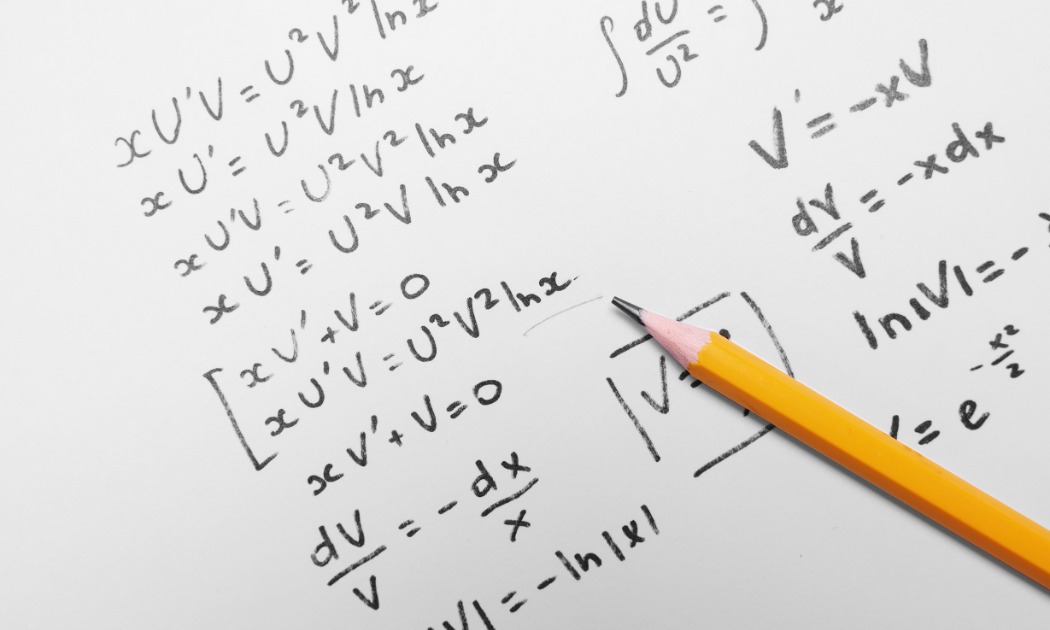
If you’re preparing for exams like CAT, MAT, XAT, GRE, or any other aptitude test, you’ve probably heard the advice:
“Make a formula sheet. It’ll help you revise faster.”
So, you sit down, write every formula you can find — from arithmetic to geometry to permutations — and proudly put it in your study file.
But then… it just sits there. Gathering dust.
When you finally open it before the exam, it feels like looking at ancient hieroglyphics.
So what went wrong?
And more importantly — how do you make a formula sheet that actually helps you learn, remember, and use formulas effectively?
Let’s break it down.
1. The Real Purpose of a Formula Sheet
Most students think a formula sheet is just a summary — a place to keep all formulas together.
But that’s only half the story.
A good formula sheet isn’t just a list — it’s a learning tool.
It helps you:
- See connections between topics.
- Recall formulas faster.
- Apply them confidently in questions.
- Save time during revision.
Think of it as your mental cheat sheet, not a decorative poster.
2. Step 1: Don’t Start With Every Formula You Find
Here’s a secret:
You don’t need to memorize every single formula in your book.
Start by writing only the formulas you’ve actually used in solving questions.
If you haven’t applied it yet, skip it for now.
Why? Because writing 200 formulas you barely understand just overwhelms your brain.
Instead, focus on core, high-frequency formulas — the ones that show up again and again in exams.
For example:
| Topic | Must-Know Formulas |
| Percentages | Profit = SP – CP; %Profit = (Profit/CP) × 100 |
| Time-Speed-Distance | Speed = Distance / Time |
| Simple Interest | SI = (P × R × T) / 100 |
| Geometry | Area of circle = πr²; Perimeter = 2πr |
| Averages | Average = (Sum of quantities) / (Number of quantities) |
Once you start solving more questions, you’ll naturally add more formulas to your sheet — and those are the ones you’ll remember best.
3. Step 2: Use Colors and Sections
A cluttered sheet = a cluttered mind.
Organize your sheet visually. Divide it by topics — Arithmetic, Algebra, Geometry, Modern Math, Data Interpretation — and use color codes:
- 🔵 Blue for formulas
- 🟢 Green for shortcuts/tips
- 🟡 Yellow for common mistakes
- 🔴 Red for “important reminders”
Example:
Geometry – Triangles
- Area = ½ × base × height
- Heron’s formula: √[s(s–a)(s–b)(s–c)]
- Tip: In a right triangle, hypotenuse² = base² + height²
- Common error: Don’t confuse height with side unless clearly mentioned.
Color helps your brain create visual anchors, making it easier to recall formulas later.
4. Step 3: Add Tiny Examples
Don’t just write formulas — show them in action.
Example:
Instead of:
Compound Interest = P(1 + R/100)ⁿ – P
Write:
CI = P(1 + R/100)ⁿ – P
Example: For P = 1000, R = 10%, T = 2 → CI = 1000(1.1)² – 1000 = 210
That little example makes the formula come alive.
It helps you remember how and when to use it, not just what it looks like.
5. Step 4: Update and Review Weekly
The biggest reason formula sheets fail:
Students make them once and never look at them again.
To actually make it work, follow the “Weekly Refresh Rule.”
Every week:
- Spend 10–15 minutes revising your formula sheet.
- Add any new formulas you learned.
- Remove ones you never use.
- Try to recall formulas without looking first.
This simple habit makes sure the formulas move from your short-term memory to your long-term recall bank.
Read More-Smart Edge’s No-Hack Philosophy: Why We Don’t Believe in Shortcut Culture
6. Step 5: Make a Mini Version for Quick Revision
Once your main sheet is ready, make a condensed version — one page front and back — with only your top 50–70 must-know formulas.
Use this before:
- Mock tests
- Final exam week
- The night before the real exam
This mini-sheet acts as your “panic-proof” revision tool.
Pro tip: Keep a digital copy on your phone too, so you can review while commuting or waiting in line.
7. Step 6: Use Formula Flashcards
If you prefer studying in short bursts, turn your formulas into flashcards.
On one side, write the concept or question:
“What’s the formula for time taken when two trains move in opposite directions?”
On the other side, write the answer:
Time = (Distance) / (Relative Speed = Sum of Speeds)
Apps like Anki, Quizlet, or Notion can make this fun and efficient.
Or you can go old-school and use paper cards.
The key is active recall — testing yourself instead of just reading.
8. Step 7: Link Formulas with Concepts
You’ll remember formulas better when you understand why they work.
For example:
- In simple interest, interest grows linearly — same every year.
- In compound interest, it grows exponentially — interest earns interest.
Knowing this helps you remember which formula to use, even if you forget the exact structure.
When you study, always ask:
“What does this formula represent?”
“How can I visualize it?”
Understanding beats memorization — every single time.
9. Step 8: Practice “Formula Retrieval”
This is a powerful trick.
When solving mock tests or practice questions:
- Try to recall the formula before checking your notes.
- If you can’t, look it up — then immediately write it down three times.
This repetition helps build muscle memory for your brain.
Within a few days, you’ll find yourself recalling formulas automatically.
10. Step 9: Make It Personal
Don’t copy someone else’s formula sheet.
What works for your friend may not work for you.
Your formula sheet should reflect:
- The topics you struggle with
- The tricks that help you remember
- The examples you found useful
When your notes feel personal, your brain connects to them emotionally — and that makes learning faster and easier.
11. Step 10: Turn It Into a Game
Learning doesn’t have to be boring.
Here are fun ways to use your formula sheet:
- Challenge yourself: “Can I recall all geometry formulas in 5 minutes?”
- Quiz with a friend: Take turns testing each other.
- Formula of the Day: Stick one on your study wall every morning.
Tiny games like these make memorization effortless.
Final Thoughts
A formula sheet isn’t about having more formulas — it’s about having the right ones, in the right way.
If you make it active, colorful, and personal, it becomes your best friend during revision — not a forgotten file at the bottom of your bag.
So, this week, take out your dusty old formula sheet.
Clean it up. Add color, examples, and structure.
Make it something you want to use — not something you have to.
Because the right formula sheet won’t just help you pass your exams —
it’ll help you master the logic behind them.
Quick Recap:
- Start small, focus on useful formulas
- Organize by topics and colors
- Add examples and notes
- Review weekly
- Create a mini version for last-minute prep
Do this consistently, and your formula sheet will go from “just another note” to your exam superpower.